MANU and the people of the island of Fatu Hiva celebrates the success of the first Fatu Hiva Monarch chick raised from an egg under human care.
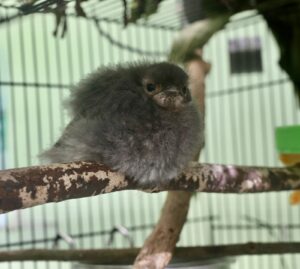 The global population of the critically endangered Fatu Hiva Monarch now stands at 18 individuals thanks to the success of the first chick raised in captivity from an egg, achieved by the Manu association and its partners. “With only three breeding females in the wild, each egg is a hope for the survival of the species,” says Chiara Ciardiello, the association’s captive breeding project manager.
In 2022, a project was launched in collaboration with Auckland Zoo to create a captive population to protect individuals from threats in the wild, particularly avian malaria and invasive predators. A breeding center was specially built on this Marquesas island, including aviaries, an equipped laboratory, and accommodation, thanks to the loan of land by a local resident, Sarah Vaki, to whom the association is eternal grateful.
In 2023, three eggs were collected, but with little success as the chicks did not survive beyond three days after hatching. No specialist had mastered the breeding of this species or any closely related species, and the “code” to successfully rear this species remained difficult to crack. Renowned specialists from Auckland Zoo, Jersey Zoo, Copenhagen Zoo, San Diego Wildlife Alliance and Zoos Victoria worked closely together in the project to find the solution needed.
In 2024, a first chick was collected five days after hatch in the wild to rescue it from falling out of a leaning nest—a delicate operation that led to the first successful rearing: the chick is now almost two years old. Finally, in June 2025, the team was confident to attempt to collect another egg, with additional specialist support from London Zoo and great progress in the results, but still the chick only survived for 10 days however provided critical insights.

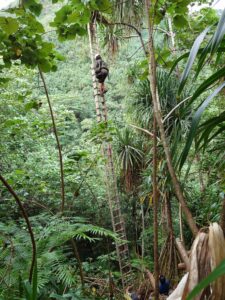
 At the end of October 2025, the team working on the Life Stop Extinction program collected another egg—a last-ditch effort, given how small the population has become. Carefully transported to the breeding center, the egg was placed in an incubator with controlled temperature and humidity, under close professional guidance. Five days later, a tiny chick hatched: a few grams of life, and new hope for a species that could disappear tomorrow. Every feeding, every weight change, every behavior is analyzed hour by hour, from dawn to dusk.
“Successfully rearing the first Fatu Hiva Monarch chick from artificial incubation to full independence was both an extraordinary privilege and a daunting responsibility. My training in artificial egg incubation and chick rearing from some of the leading experts, combined with survival will of this Fatu Hiva Monarch chick made this step possible” said Leilani Fowlke, that supervised the chick rearing.
Little by little, the chick grew to adult weight of 40 grams. Once it was ready to fledge, the bird left the
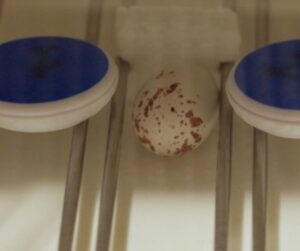
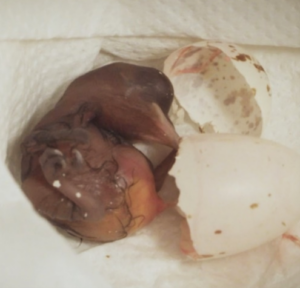
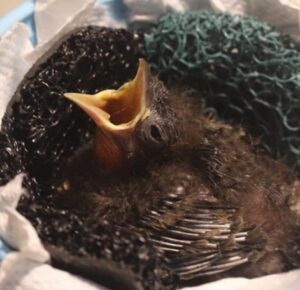
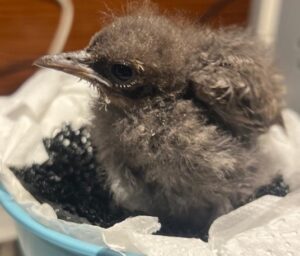
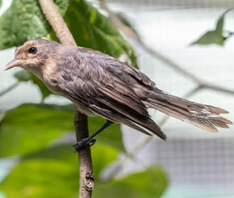
incubator for a small cage, under the watchful eye of the team. « Watching and supporting these chicks first flight and steps in life is extraordinary” says Stella Jørgensen, team member from Copenhagen Zoo, and continues: « the long-awaited moment of its first flight, symbolizing the culmination of a month of uninterrupted vigilance, analysis, doubts, and determination of the whole team”.
Today, the 40-day-old monarch flutters about and feeds independently! This success confirms that even in a critical situation after two years of failure, hope remains when joint efforts are combined to strengthen expertise.
Thanks to all the partners already supporting the species conservation project.
This ex-situ project is supported by the European Union through the LIFE+ Stop Extinction program, the French government (Fonds Vert), Auckland Zoo, Beauval Nature, LPO, UNIVET Nature, Zoos Victoria, Copenhagen Zoo, BirdLife International and its Species Champion Ted Reissing. The French Polynesian Environment Department has also allocated funding and authorized the captivity of the species. Several international organizations have also supported the species conservation project (EAZA Silent Forest, Marlow Bird Park, Pendl Lab, Pacific Bird Conservation, ASZK, ZGAP, Clinic for Birds, Reptiles, Amphibians and Fish Justus-Liebig-Universität Gießen, Keauhou Bird Conservation Center, Pacific Rim Conservation, ILM, IRD, Fondation Botiaux Dulac-Fondation de France, OFB, European Solidarity Corp). Other local organizations are also providing support, including Air Tahiti, Air Tahiti Nui, EDT Engie, and the Fatu Hiva Town Hall.
This project needs even more support in the future it includes the 5 most threatened bird species in French Polynesia in case you have any Christmas gifts left for conservation we urgently need additional co-funding for several activities for each species as well as expert knowledge and long-term and self-funded volunteers for the projects.
Direct contact for the Fatu Hiva project:
- Chiara Ciardiello, Chargée du programme de captivité du Monarque de Fatu Hiva
- Email: cchiara@manu.pf
- Website: https://manu.pf
- Facebook: Manu-SOP
Contact for international partners and general questions:
- Simon Bruslund, Copenhagen Zoo
- Email: sb@zoo.dk
- Website: https://www.zoo.dk/naturbevarelse/fransk-polynesien
- LinkedIn: https://www.linkedin.com/company/copenhagen-zoo/posts/
Download project flyer as PDF:
Some additional facts about the Fatu Hiva Monarch:
– The island of Fatu Iiva (85 km²), accessible only by boat, has 600 inhabitants. It is the southernmost island of the Marquesas / French Polynesia (1,100 km north of Tahiti).
– Critically endangered species: The Fatu Hiva Monarch (Pomarea whitneyi), a territorial forest-dwelling insectivorous bird, is endemic to the island and classified as “Critically Endangered” by the International Union for Conservation of Nature (IUCN – Red List). Due to introduced invasive predators (black rats and cats), its population has declined by 97% in 21 years. It is now also threatened by avian malaria. Its current population is 16 individuals in the wild.
– Distribution in Fatu Hiva: Once common throughout the island (and other Marquesan islands), it is now restricted to 29 hectares in the Tai‘u‘ Valley, in the heart of a 600-hectare predator management zone. The black rat arrived in the 1980s and spread throughout the island in less than 20 years.
– Longevity & reproduction: The Fatu Hiva Monarch is a long-lived species, living above 20 years. Like many island species, it has a very slow reproductive biology: it begins to reproduce at around 2 to 3 years of age, lays only one egg, and both parents care for the young for 4 to 6 months.
– Egg collection is the best strategy compared to chick collection as the wild pair can re-clutch within few weeks.
– The Polynesian Ornithological Society (SOP Manu), founded in 1990, is the local representative of BirdLife International and has been running a conservation program dedicated to the Fatu Hiva Monarch since 2008.


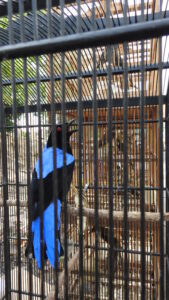 To create the aesthetic dataset for birds, over 6000 volunteers from 78 countries rated photographs of birds through the “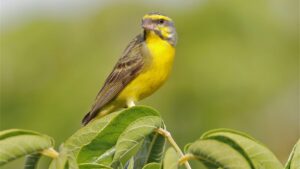
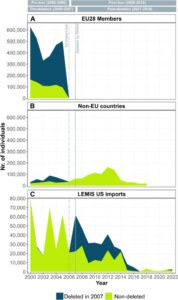 previously attributed to the 2005 EU import ban on wild birds. However, during 2005-2007 the global bird trade did a massive dip due to global bird-flu scare! Prior research analyses suggesting that the EU bird import ban was a conservation success did not account for Ghana’s 2007 removal of 114 bird species from CITES Appendix III, one of the largest deletion events in the history of CITES. In our study we analyzed trade data of CITES-listed species and non-CITES-listed species (including U.S. imports and global songbird trade data) to assess the effects of this deletion on reported trade patterns, examining changes in trade volumes as well as taxonomic and spatial shifts. Before their removal, deleted species comprised 70.7 % of global bird trade reported in the CITES Trade Database. After 2007, no deleted species were recorded in CITES data anymore. But our research have showed that the trade picked up again but was now “invisible” because authorities no longer documented the trade of the now un-listed birds in the CITES databases, while US imports of these species increased fourteenfold, new markets for African birds unfolded throughout Asia as well as illegally into the EU after 2006 peaking in volume between 2009 and 2014.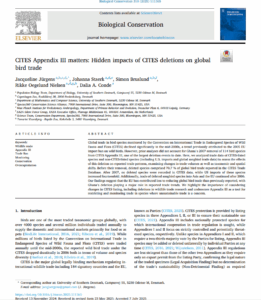
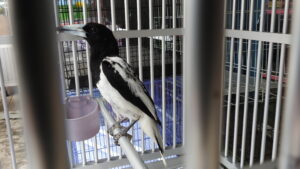
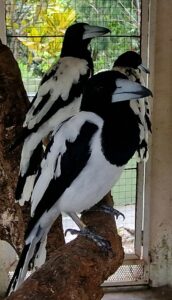
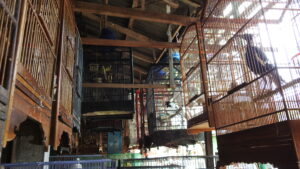
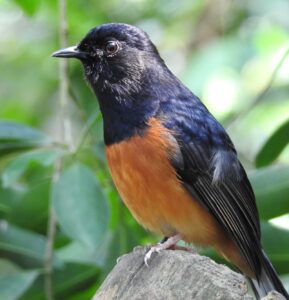
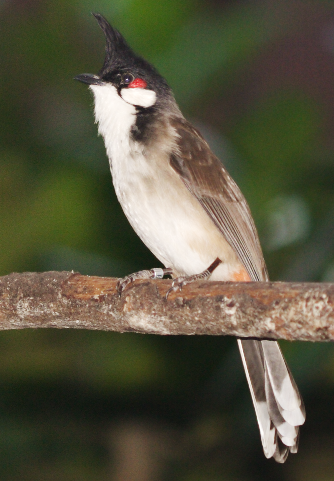
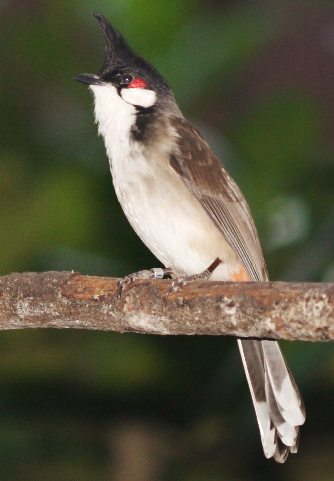
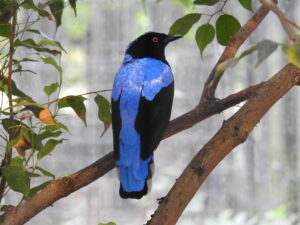
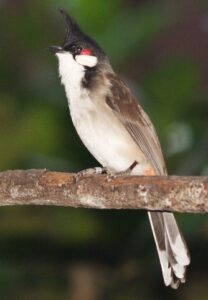
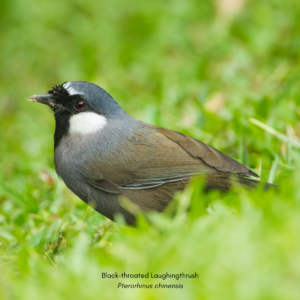
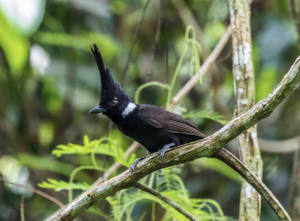
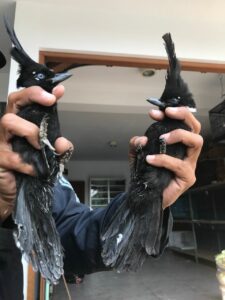
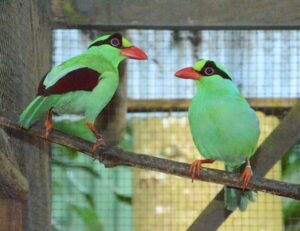

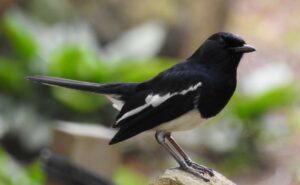

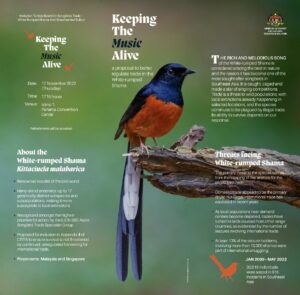
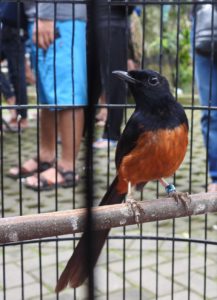
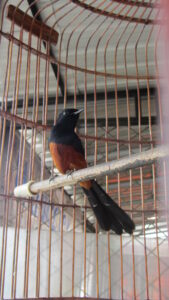 In the case of the White-rumped Shama nearly all range-states actively spoke out in support of the proposal, and none opposed this proposal. Particularly important was Indonesia who formulated their commitment for the conservation of this species which have the highest diversity of subspecies, in this country, with many of which are under serious pressure due to the trade.

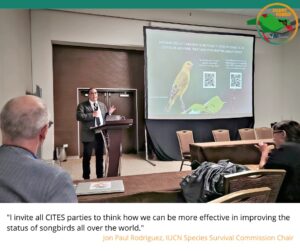


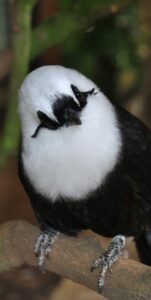
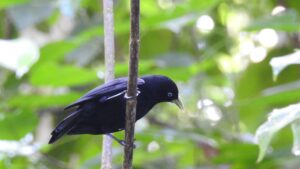
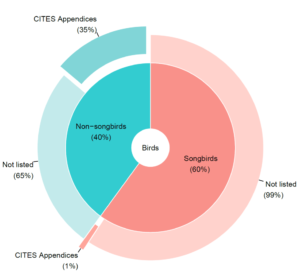
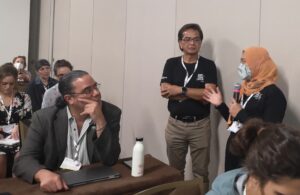
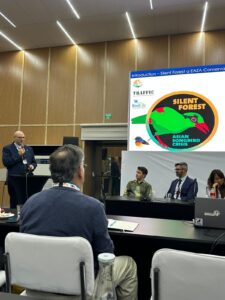
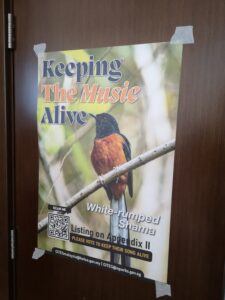 Under the title Keeping the Music Alive the governments of Malaysia and Singapore held a wonderful side event aimed at explaining the rationale behind the two proposals, 8 and 9 on the
 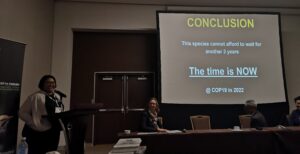 extinction it’s appendix I listing will allow more control, enable establishment of only sustainable captive breeding and trade to be legal and for illegal activities to be punished harder. It is also apparent that the White-rumped Shame is currently on the same path which have led the Straw-headed Bulbul to the edge of extinction a CITES appendix II listing in this species is only one conservation tool needed to keep this species away from a Red Listing and avoid further local extinctions. In conclusion;